
Pickup feels weak again
The car improved briefly after service or basic cleaning, then began feeling heavy or hesitant again.
EngineRoom Deep Clean · Chennai
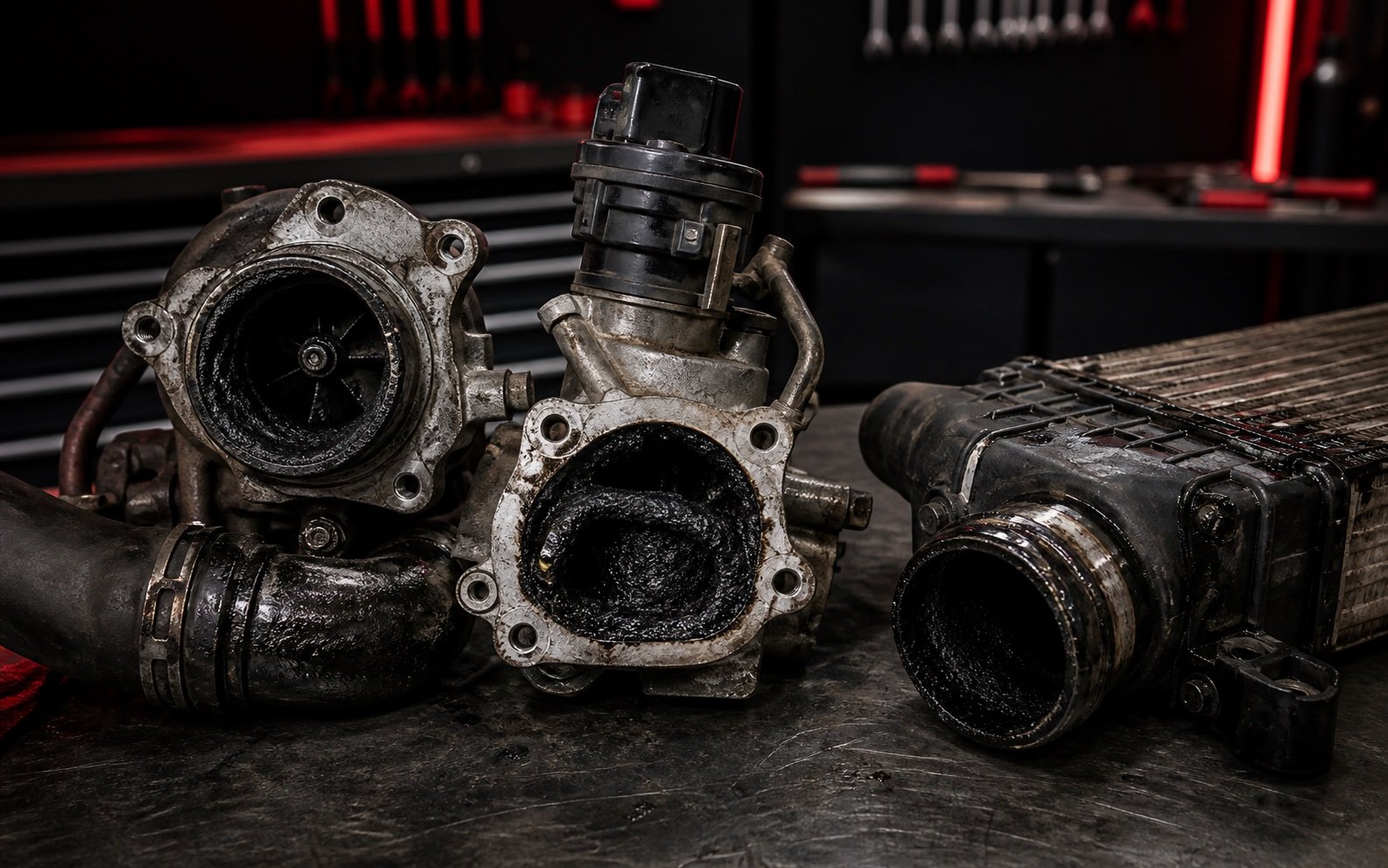
When a basic carbon clean is not deep enough, EngineRoom physically addresses heavy soot and oily deposits across the intake manifold, EGR valve, throttle body, turbo inlet and intercooler charge-air path—after a vehicle-specific inspection.
Why owners search for this
EGR soot can mix with oil vapour and build a sticky layer through the intake route. Cleaning only one visible component may not address deposits elsewhere—and the same symptoms can also come from faults that cleaning cannot repair.
The car improved briefly after service or basic cleaning, then began feeling heavy or hesitant again.
Smoke, harsh combustion or dull acceleration can justify checking airflow, EGR operation and other related systems.
Unstable airflow and deposit-heavy components may contribute, but sensors, injectors and mechanical faults must also be ruled out.
Recurring warnings need scan-led diagnosis. The restriction may sit upstream, downstream or outside the cleaning scope.
Repeated cold starts, idling and low-load driving can create operating conditions associated with heavier deposit accumulation.
Owners often search for EGR and intake manifold cleaning after visible buildup or persistent drivability symptoms.
The air-path problem
The intake manifold distributes air to the cylinders. The EGR system routes controlled exhaust gas back into the intake. Oil vapour and soot can combine into deposits that narrow passages, affect valve movement or contaminate accessible surfaces.
Five-part care package
Access and cleaning method vary by engine design. EngineRoom confirms what can be safely cleaned, what needs replacement and what should not be disturbed.
Accessible plenum and runner deposits inspected and cleaned after removal where required.
Soot accumulation and accessible passages cleaned; failed valves are diagnosed separately.
Deposit-heavy airflow surfaces cleaned with attention to component-specific handling.
Accessible turbo inlet and connected air path inspected and cleaned as applicable to the vehicle.
Charge pipes, intercooler connections, hoses and accessible airflow route checked for oily contamination, restriction or leaks.
Choose the right depth
A non-dismantling carbon-cleaning service for eligible petrol and diesel engines.
For vehicles where inspection suggests significant accessible deposits or repeat air-path symptoms.
Workshop process
Every step is designed to protect the vehicle, document the condition and separate cleanable buildup from actual component failure.
We review driving complaints, history, warning lights and visible evidence before agreeing scope.
Applicable components are accessed carefully and deposit condition is documented where possible.
Selected components are cleaned using methods appropriate to their material, design and condition.
Components are reassembled, faults rechecked and drivability reviewed before handover.
Proof-led care
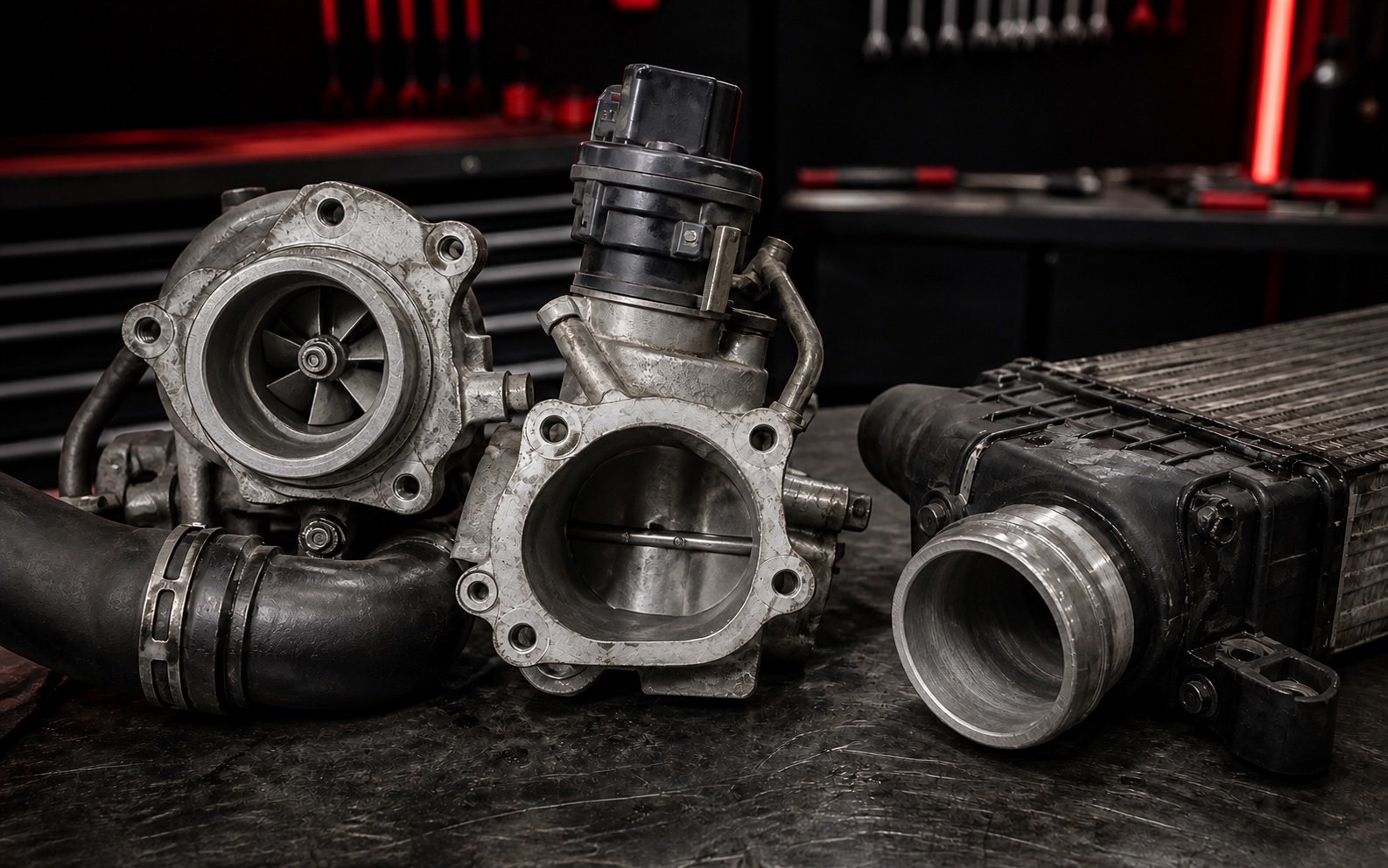
Images represent the type of before/after documentation used. Actual results depend on component condition and vehicle design.
Qualification before booking
Free eligibility check
EngineRoom will review whether the manual deep clean, standard decarbonisation or diagnosis-first route makes more sense.
EngineRoom has saved your vehicle details. For the fastest response, send the prepared summary on WhatsApp.
Continue on WhatsAppSearch questions, answered
The planned deep-clean scope covers the intake manifold, EGR valve and accessible EGR path, throttle body, turbo area and inlet route. Final scope depends on vehicle design, accessibility and inspection findings.
Yes, EGR inspection and cleaning are part of the package when appropriate. A failed actuator, damaged valve or electrical fault may require repair or replacement instead of cleaning.
If deposits are materially restricting airflow, cleaning may improve drivability. Results vary, and similar symptoms can be caused by other faults, so EngineRoom does not promise a fixed mileage or power gain.
The package includes inspection and cleaning of the accessible turbo inlet and related air path where applicable. Internal turbo damage, bearing wear, oil-supply issues or actuator faults need specialist diagnosis and are not repaired by carbon cleaning.
Diesel EGR and intake systems commonly develop heavy soot-and-oil deposits, but applicable petrol engines can also develop intake and throttle deposits. Eligibility is decided after vehicle-specific review.
Price depends on the vehicle, component access, deposit severity, gasket requirements and whether faults are discovered. EngineRoom confirms the scope and quote after the eligibility check.
Unlike the standard 30-minute service, manual decarbonisation requires component access, cleaning, refitting and verification. Workshop time varies by model and condition and is confirmed before work begins.
Do not clean blindly
Choose the right level of engine care